
MIT Builds Bacterial Transistors for Programmable Living Circuits
MIT researchers engineered bacterial cells to act as transistor-like components that exchange chemical signals and perform logic operations. In a Nature Chemical Biology study, the team assembled circuits containing up to 24 colonies, while proposing possible future uses in plants that could detect environmental stress and trigger responses.
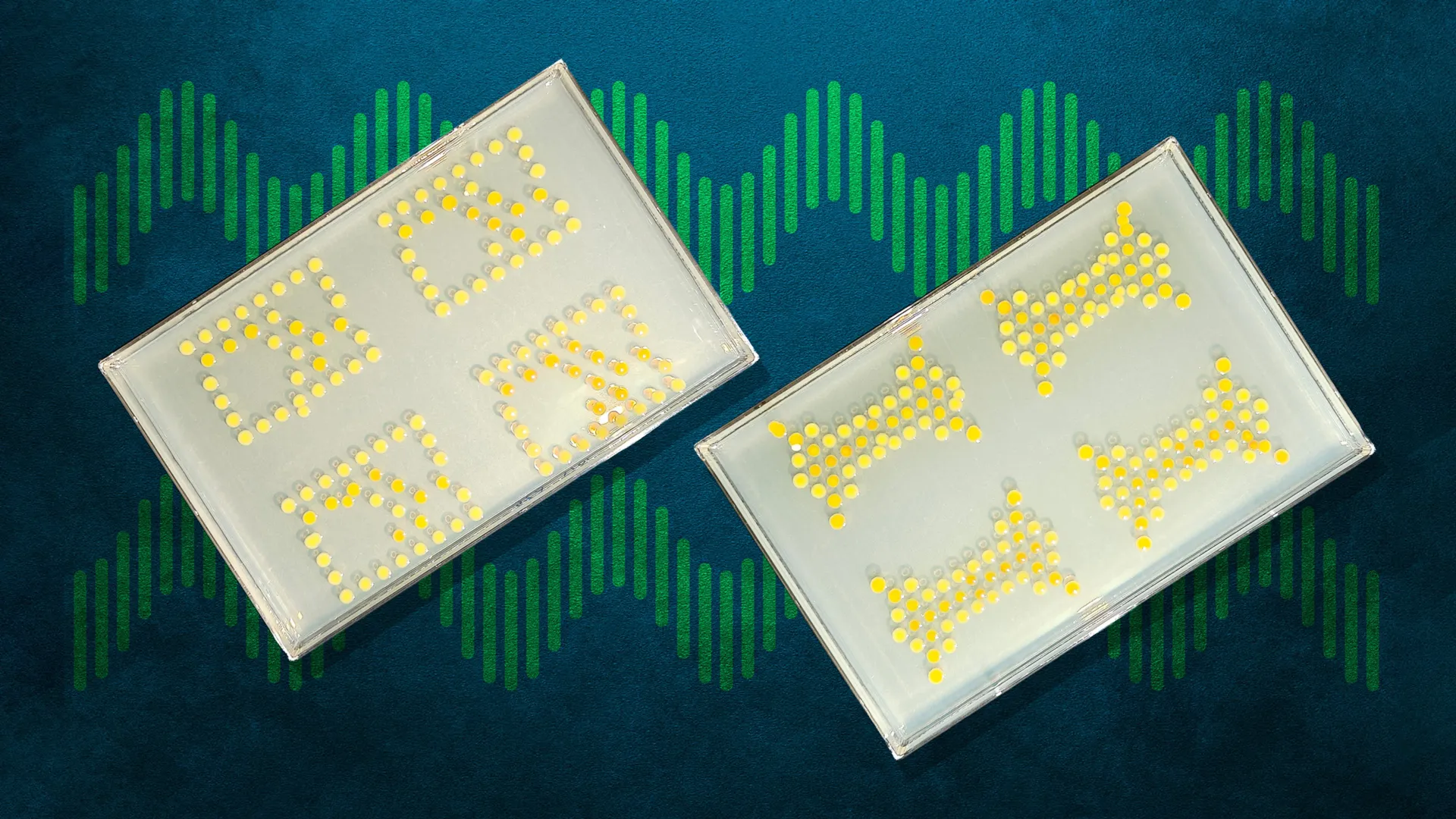
MIT researchers have engineered bacteria to function as transistor-like components, creating living circuits that process information through chemical signals rather than electrical current. The work, published in Nature Chemical Biology, represents a modular approach to building biological computing systems outside a single cell.
In conventional electronics, transistors regulate the flow of electricity. In the MIT system, engineered bacterial cells control the movement of signaling molecules between separate colonies. The researchers used Pantoea agglomerans, a bacterium commonly found on surfaces including plants, and designed five bacterial strains to serve as circuit components.
Two strains act as the primary bacterial transistors. Both respond to a molecule called OC 6 and also sense a second molecule, OC 12. One transistor type switches on in response to OC 6, while the other switches off. Depending on the presence of the target molecules and the transistor's state, the cells produce an output signal called OHC 14.
Three additional strains serve as relays. They convert the OHC 14 signal into another chemical output that can activate the next transistor in a circuit. This arrangement allows the cells to be connected in sequence, much like components on an electronic circuit board.
To build the circuits, the researchers printed bacterial colonies onto agar plates, positioning neighboring colonies about 5 millimeters apart. According to the study report, the spacing helps signals move from one colony to the next without activating more distant components.
The team demonstrated several types of logic operations, including multi-input, “or,” and “imply” gates. The circuits could also add two or three inputs, process multiple signals, and function as a demultiplexer—a system that routes one input to different destinations according to a separate control signal. The largest demonstration contained 24 interconnected colonies and was designed to add two inputs.
The approach addresses a limitation of many synthetic-biology circuits, which place multiple interacting components inside the same cell. That can require separate transcription factors for different operations and may place demands on a cell’s protein-production machinery. Distributing the components across multiple cells gives researchers a way to combine simpler units into more complex arrangements.
The circuits are far slower than electronic computers. Each calculation takes approximately eight hours. The researchers argue that this timescale could still be relevant for biological settings, where changes such as plant growth and environmental stress unfold more slowly than electronic operations.
One proposed application is placing similar circuits on plant roots or leaves. In that scenario, the bacteria could potentially process chemical signals associated with conditions such as drought or pest attacks and trigger a response, such as producing a fungicide. The study demonstrated bacterial circuits on growth plates, however, not a functioning computer integrated into a living plant.
Reporting Note
Biohack Report distinguishes preliminary findings, clinical evidence and commercial claims whenever the available reporting supports that distinction. Coverage is informational and is not medical advice.